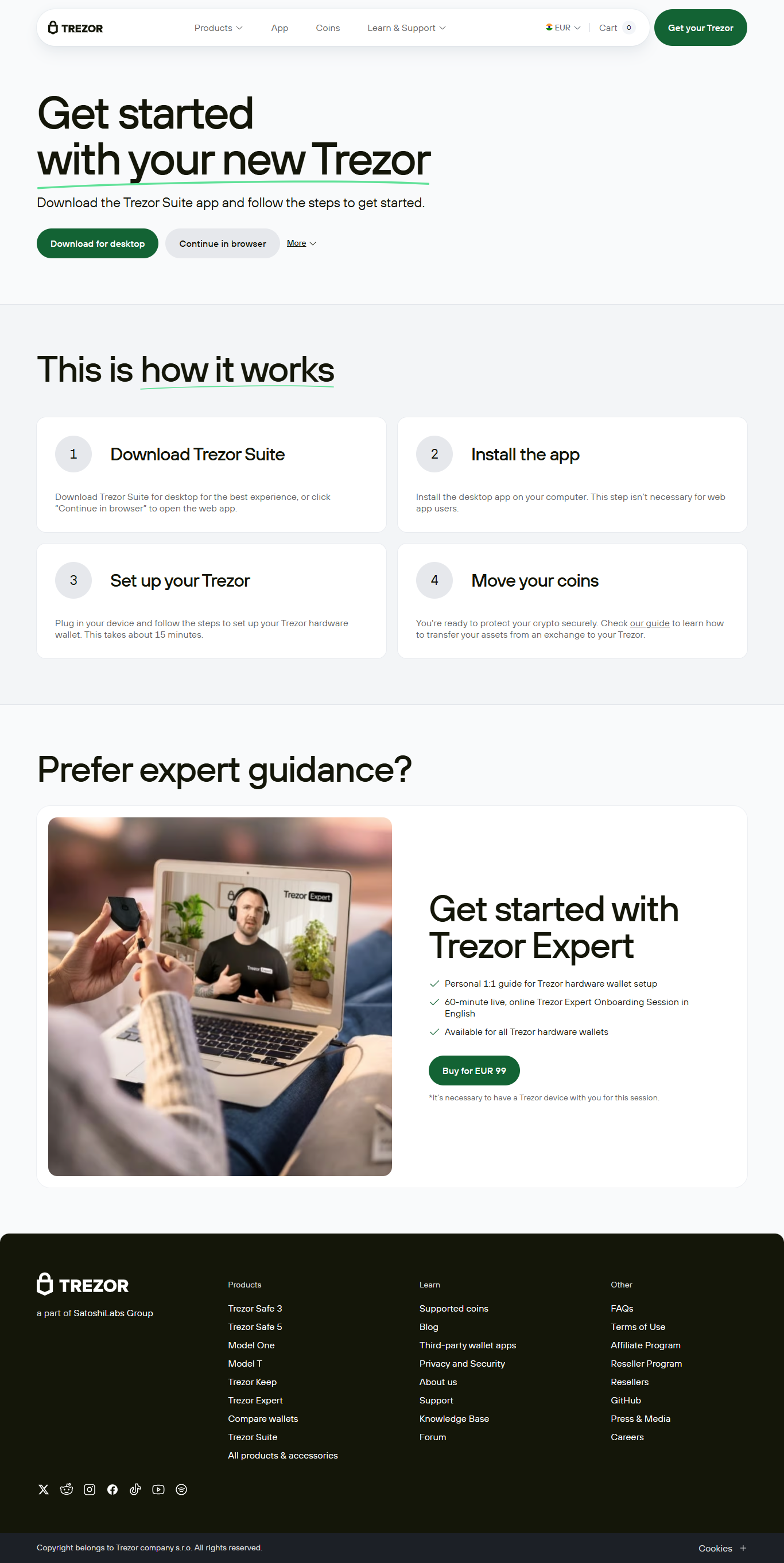
Trezor.io/Start provides the official onboarding instructions for your Trezor hardware wallet. Whether you are new to cryptocurrency or a seasoned investor, this guide ensures that your private keys and digital assets remain protected at all times.
1. Verify Your Device
Before connecting your device, check that the package seal is intact and unbroken. Authentic Trezor devices come with tamper-evident packaging. Once unboxed, verify your device’s authenticity through the official Trezor Suite application or website. Never purchase hardware wallets from unauthorized resellers.
2. Secure Initialization Process
Use only the official Trezor.io/Start link to initialize your device. Always confirm that the URL begins with https://trezor.io and displays a valid SSL certificate. Initialization generates your unique recovery seed phrase, a critical backup that must remain private and offline. Write it down on paper or engrave it on a metal backup — never store it digitally.
3. Protect Your Recovery Seed
Your seed phrase is the only method of recovering your wallet. If lost or exposed, you risk losing control of your cryptocurrency permanently. Store your seed in a secure, fire-resistant location. Avoid taking photos or screenshots of it, and never share it with anyone — not even official support staff.
4. Firmware Verification & Updates
Every Trezor firmware release is cryptographically signed by SatoshiLabs. During setup, verify that your device displays the correct firmware signature. Always install updates through Trezor Suite or the official website. Never download firmware files from third-party sources or click links from unverified emails.
5. Prevent Phishing & Fake Sites
Phishing websites often imitate Trezor’s appearance to trick users into revealing their recovery phrase. To stay safe:
- Always access Trezor pages through bookmarks or manually typing
trezor.io. - Check for HTTPS and the correct domain name.
- Never enter your recovery phrase online — Trezor will never request it.
- Report suspicious sites or emails directly to Trezor support.
6. Maintain Strong Operational Security
Secure your personal computer before connecting your wallet. Keep your OS and antivirus software updated. Avoid public Wi-Fi during sensitive operations. Use hardware-based multi-factor authentication when possible and store backups separately. If managing large holdings, consider implementing multisignature (multisig) setups for additional protection.
7. Trezor Suite Integration
Trezor Suite is the official management software for Trezor devices. It allows you to send, receive, and track assets while verifying transactions directly on your device’s secure display. Suite’s built-in security checks prevent man-in-the-middle attacks and ensure your data is never transmitted without encryption.
8. Security Practices on This Site
This webpage applies modern web security controls, including enforced HTTPS, Content-Security-Policy, and clickjacking protection. Frames and external scripts are restricted to trusted origins, and cookies must use secure attributes. These measures reduce exposure to cross-site scripting (XSS) and phishing attempts. However, users are encouraged to enable browser security settings and stay updated with the latest versions.
9. Continuous Vigilance
Security is not a one-time setup but an ongoing process. Review your backup periodically, stay informed about security advisories, and only interact with verified community resources. Genuine Trezor support will never ask for your private keys, passwords, or recovery seed via email or chat.
By following these best practices, you ensure your Trezor hardware wallet remains the most secure way to manage your cryptocurrencies. Your private keys stay offline, out of reach of hackers, and under your complete control.
Start Secure Setup Now